A well-designed Chihuahuan Desert landscape is not a compromise. It can be lush in its own way, full of color in spring and after summer rains, shaded where you need it, and far less thirsty than a lawn-and-hedge yard. This guide covers the plants, soils, irrigation, hardscape and seasonal care that make water-wise landscaping work in El Paso's Upper Valley.
Understanding El Paso's Desert Climate
El Paso sits in the northern Chihuahuan Desert, the largest desert in North America. Good landscaping begins with understanding what that means in practice:
- Low rainfall. The area typically receives roughly 8 to 10 inches of precipitation a year, with a large share arriving during the summer monsoon, usually from about July through September.
- Intense sun. El Paso is one of the sunniest cities in the United States. Afternoon sun on west-facing walls and paving can be punishing for plants and people alike.
- Hot summers, cool winters. Summer highs frequently climb well into the 90s and above 100°F. Winters are mild during the day but nights regularly drop below freezing, and occasional hard freezes can damage marginally hardy plants.
- Wind. Spring winds can be strong and drying, which stresses newly planted material.
- Low humidity. Dry air increases evaporation from soil and leaves.
Plants native to the Chihuahuan Desert are adapted to all of this. That is why they tend to need less water, less fertilizer and less fuss than plants imported from wetter regions, once they are established.
Soil, Caliche and Site Preparation
What lies beneath your yard matters as much as what you plant in it. Soils around El Paso vary considerably. Upland areas often have caliche, a layer of soil cemented by calcium carbonate that can be as hard as concrete. River valley land, including parts of the Upper Valley El Paso, often has alluvial soils deposited by the Rio Grande that can range from sandy to silty or clayey. Most local soils are alkaline.
Why caliche is a problem
Caliche blocks root growth and traps water. A tree planted in a small hole dug into caliche can end up sitting in what amounts to a pot with no drainage, where roots either drown or circle. If you encounter caliche, you generally need to break through it to allow drainage or excavate a wider planting area.
Practical soil tips
- Test drainage. Dig a planting hole, fill it with water, and see how long it takes to drain. Very slow drainage signals a problem worth solving before planting.
- Dig wide, not deep. Most desert plant roots spread outward. A hole two to three times as wide as the root ball is generally more useful than a deep one.
- Go easy on amendments. Native plants usually do best in native soil. Heavily amended planting holes can discourage roots from growing outward into surrounding ground.
- Mulch the surface. Gravel or organic mulch reduces evaporation and moderates soil temperature.
Native and Adapted Plants for El Paso
The following plants are native to the Chihuahuan Desert or closely adapted to it and are widely used in El Paso landscapes. Always check mature size before planting; many desert shrubs and trees grow larger than their nursery containers suggest.
Trees
- Desert willow (Chilopsis linearis). Not a true willow. A graceful small tree with orchid-like pink, purple or white flowers from late spring into summer. Attracts hummingbirds and loses its leaves in winter, letting sun through when you want it.
- Honey mesquite (Prosopis glandulosa). The iconic desert tree, with filtered shade and a sculptural branching habit. Very drought tolerant once established. Give it room and prune for structure when young.
- Texas mountain laurel (Dermatophyllum secundiflorum). An evergreen large shrub or small tree with fragrant purple spring flowers that many people compare to grape soda. It is generally grown in El Paso but can be damaged in unusually hard freezes, so a protected spot helps. Its seeds are toxic; keep that in mind around children and pets.
Shrubs
- Texas sage (Leucophyllum frutescens). Silvery foliage and waves of purple blooms that often appear after summer rain or humidity. Looks best when allowed to keep its natural shape rather than being sheared into balls.
- Apache plume (Fallugia paradoxa). White flowers followed by feathery pink seed heads. Very tough.
- Creosote bush (Larrea tridentata). The signature shrub of the desert, known for the distinctive scent after rain.
Accents and succulents
- Agave. Several species, including Parry's agave (Agave parryi) and lechuguilla (Agave lechuguilla), are well suited. Keep sharp-tipped agaves away from walkways and play areas.
- Yucca. Soaptree yucca (Yucca elata) and banana yucca (Yucca baccata) are strong vertical accents with tall flower stalks.
- Red yucca (Hesperaloe parviflora). Not a true yucca. Grassy clumps with long coral-red flower spikes that hummingbirds love. Soft-leaved and safe near paths.
- Sotol (Dasylirion wheeleri). A shimmering, spherical rosette that catches the light beautifully.
Grasses and flowering perennials
- Mexican feathergrass (Nassella tenuissima). Fine, flowing texture that moves in the breeze. It can reseed readily, so place it where volunteers are welcome or remove seedlings.
- Blue grama (Bouteloua gracilis). A native grass with eyelash-like seed heads, useful as a low-water meadow or lawn substitute.
- Globe mallow (Sphaeralcea spp.). Orange, apricot or pink cup-shaped flowers, very drought tolerant.
- Blackfoot daisy (Melampodium leucanthum). Low mounds of white daisies over a long season.
- Desert marigold (Baileya multiradiata). Bright yellow flowers above silvery foliage.
- Penstemon. Several native species bring spring spikes of red, pink or purple for hummingbirds.
Shade Trees and Hardscape
Placing shade where it counts
In El Paso, shade is the most valuable thing a landscape can provide. Trees planted on the west and south sides of a house can shade walls and windows during the hottest part of the day, and deciduous trees such as desert willow let winter sun through when warmth is welcome. Shade over paving and patios also makes those areas usable for more of the year. Our article on energy-efficient classic homes covers how landscape and architecture can work together to cut cooling loads.
Hardscape that belongs in the desert
- Gravel and decomposed granite. Permeable surfaces for paths and planting areas. Choose colors that relate to local stone and soil rather than bright white, which increases glare.
- Flagstone and pavers. Set on sand or gravel beds where possible so rain can soak in.
- Boulders. Well-placed local stone gives a planting bed structure and a natural look.
- Walls. Low garden walls in stucco or stone define spaces and extend the architecture into the garden.
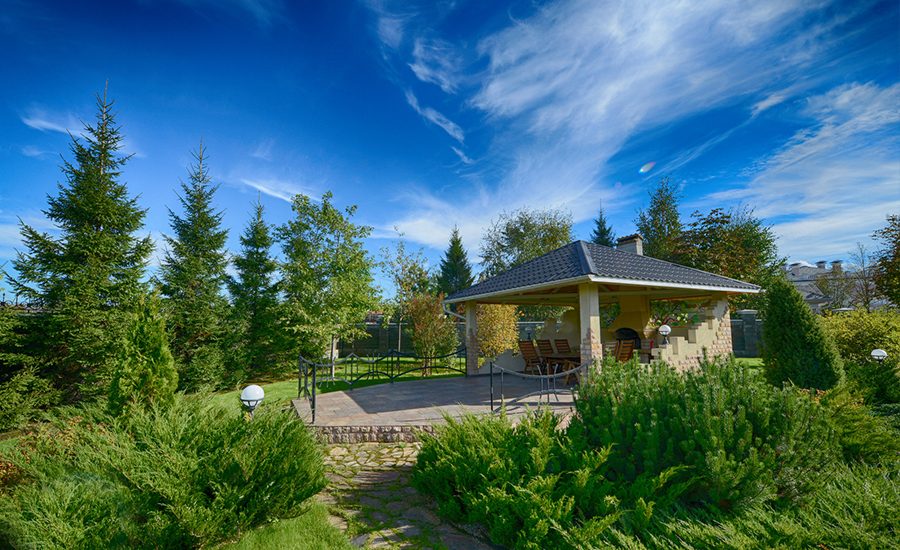
- Shade structures. Pergolas, ramadas and loggias add shade immediately while trees mature.
Harvest the rain you get
Because much of the rain falls in brief, heavy bursts, simple water harvesting can help. Shallow basins around trees, gentle swales and directing roof downspouts toward planted areas all help rain soak in where it is useful. Keep water away from foundations and follow any community or local drainage requirements.
Tip: Plant in fall, not summer
In El Paso, fall is generally the best time to plant most native trees and shrubs. Soil is still warm enough for roots to grow, while cooler air reduces stress on leaves. Plants establish roots through fall and winter and face their first summer much better prepared. Spring planting also works, but plants will need more careful watering as heat arrives. Planting in the heat of midsummer is the hardest start you can give a plant.
Drip Irrigation Done Right
Native plants are drought tolerant once established, but nearly all need regular supplemental water for their first year or two, and many look better with occasional deep watering afterward. Drip irrigation is the most efficient way to deliver it.
Design principles
- Zone by water need. Put trees, shrubs and perennials on separate valves. Trees need deep, infrequent watering; small perennials need less at a time.
- Move emitters outward. As a tree grows, its roots spread well beyond the trunk. Relocate or add emitters toward the drip line over time rather than keeping them against the trunk.
- Water deeply and less often. Deep watering encourages deep roots. Frequent shallow watering keeps roots near the surface where they bake.
- Adjust with the seasons. Water use should rise in late spring and early summer, which is often the driest and hottest stretch, ease during monsoon rains, and drop considerably in winter.
- Use a smart controller. Weather-based or soil-moisture controllers help avoid overwatering, which is a common cause of problems in desert plants.
Check local water rules
El Paso Water has long promoted conservation and has rules governing outdoor watering. Requirements can change, so check current guidelines when setting your irrigation schedule.
Seasonal Care Calendar
| Season | Key tasks |
|---|---|
| Late winter | Prune most deciduous trees and shrubs while dormant; cut back perennials and grasses; check irrigation lines for freeze damage. |
| Spring | Increase irrigation gradually; watch for wind stress on new plants; enjoy peak bloom from many natives; plant if needed. |
| Early summer | Often the hottest, driest period before monsoon; monitor new plantings closely; refresh mulch. |
| Monsoon (roughly Jul–Sep) | Reduce irrigation after soaking rains; watch drainage paths; pull weeds after rain while soil is soft. |
| Fall | Prime planting season; divide overgrown perennials; begin tapering irrigation. |
| Winter | Water established plants occasionally during dry spells; protect frost-sensitive plants on hard-freeze nights. |
A note on pruning
The most common mistake in desert landscapes is over-pruning. Shearing Texas sage into tight shapes, limbing up mesquite too high, or cutting back grasses too often removes the natural form that makes these plants beautiful. Prune to remove dead wood, improve structure or clear paths, and let plants grow into their shape.
Matching Landscape to Architectural Style
Landscaping and architecture should read as one composition. The same plant palette can be arranged very differently depending on the house.
Craftsman
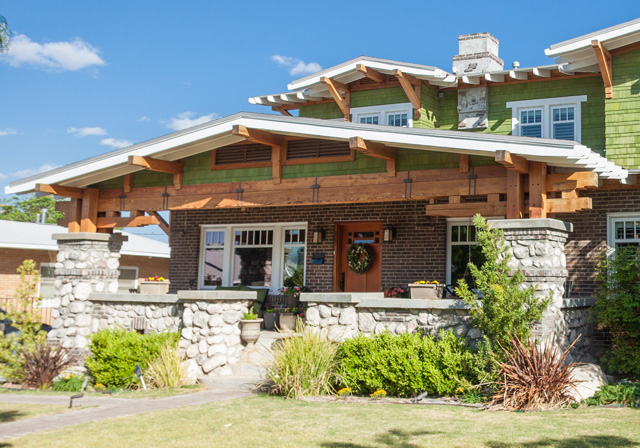
Craftsman homes favor a natural, informal garden. Use stone edging, gravel paths leading to the porch, and loose drifts of perennials and grasses such as globe mallow, penstemon and blue grama. A desert willow near the porch adds filtered shade. See our Craftsman page.
Spanish Revival
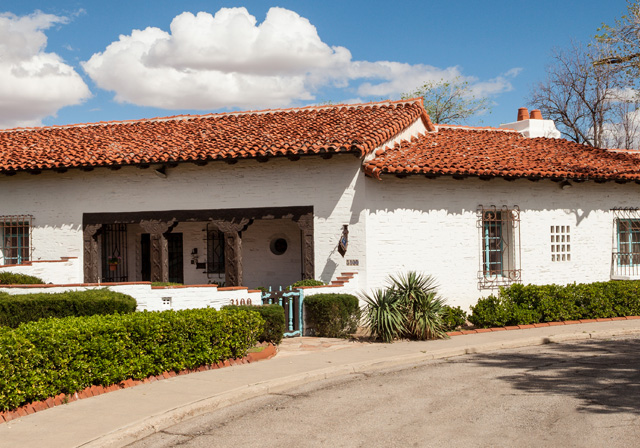
Spanish Revival calls for courtyards, tile or stone paving, potted plants and bold sculptural accents. Agave, sotol and red yucca look striking against stucco, and a small fountain or water feature, used thoughtfully, adds the sound of water. Ironwork gates frame views into the garden.
Italianate
The formal, symmetrical Italianate facade suits a more ordered layout: paired plantings flanking the entry, straight paths, and clipped structure balanced by softer desert plants. Evergreen Texas mountain laurel can provide year-round form where it is protected from hard freezes.
English Tudor-Cottage
The Tudor-Cottage suggests a cottage garden, which in the desert translates to layered, colorful perennials such as blackfoot daisy, desert marigold, penstemon and Apache plume along a meandering path. Shade trees and pergolas are especially valuable here, since this style has the shallowest eaves. For more on the four styles, read how to choose your home style.
Community Landscaping at The Fields
At The Fields, the homeowners association manages landscaping in the community's common areas, and that landscaping is designed to be true to the Chihuahuan Desert. The neighborhood includes an approximately 11,000-square-foot public park and a hike and bike trail along Sunset that will eventually connect to Riverbend Park. Common areas set a consistent, native character for the neighborhood, and each homeowner's own garden can build on that foundation in a way that suits their home's style.
That approach reflects the idea behind the whole community: we provide the environment, you provide your home. You can learn more about the setting on our neighborhood page, and if you have questions about landscape standards for individual lots, our FAQ is a good place to start.
Key Takeaways
- El Paso's low rainfall, intense sun and freezing winter nights favor native Chihuahuan Desert plants.
- Check for caliche and poor drainage before planting, and dig wide rather than deep.
- Plant in fall when possible, and expect to water new plants regularly for their first year or two.
- Use drip irrigation zoned by water need, water deeply and infrequently, and adjust with the seasons.
- Place shade trees and structures on the south and west to cool both house and outdoor spaces.
- Tailor the layout to your home's style, from informal Craftsman gardens to Spanish Revival courtyards.

We are the family and team behind The Fields, stewarding the last piece of Zach T. White's River Bend Farm into a legacy neighborhood. Questions? Contact us.